Introduction
React JS is one of the most powerful and widely used JavaScript libraries for building modern user interfaces and interactive web applications. Developed by Meta (Facebook), React helps developers create scalable, fast, and dynamic websites using reusable UI components.
Today, businesses across industries rely on React JS development to build dashboards, SaaS platforms, eCommerce applications, and enterprise software. Because of its flexibility and performance, React has become a core technology in modern frontend development.
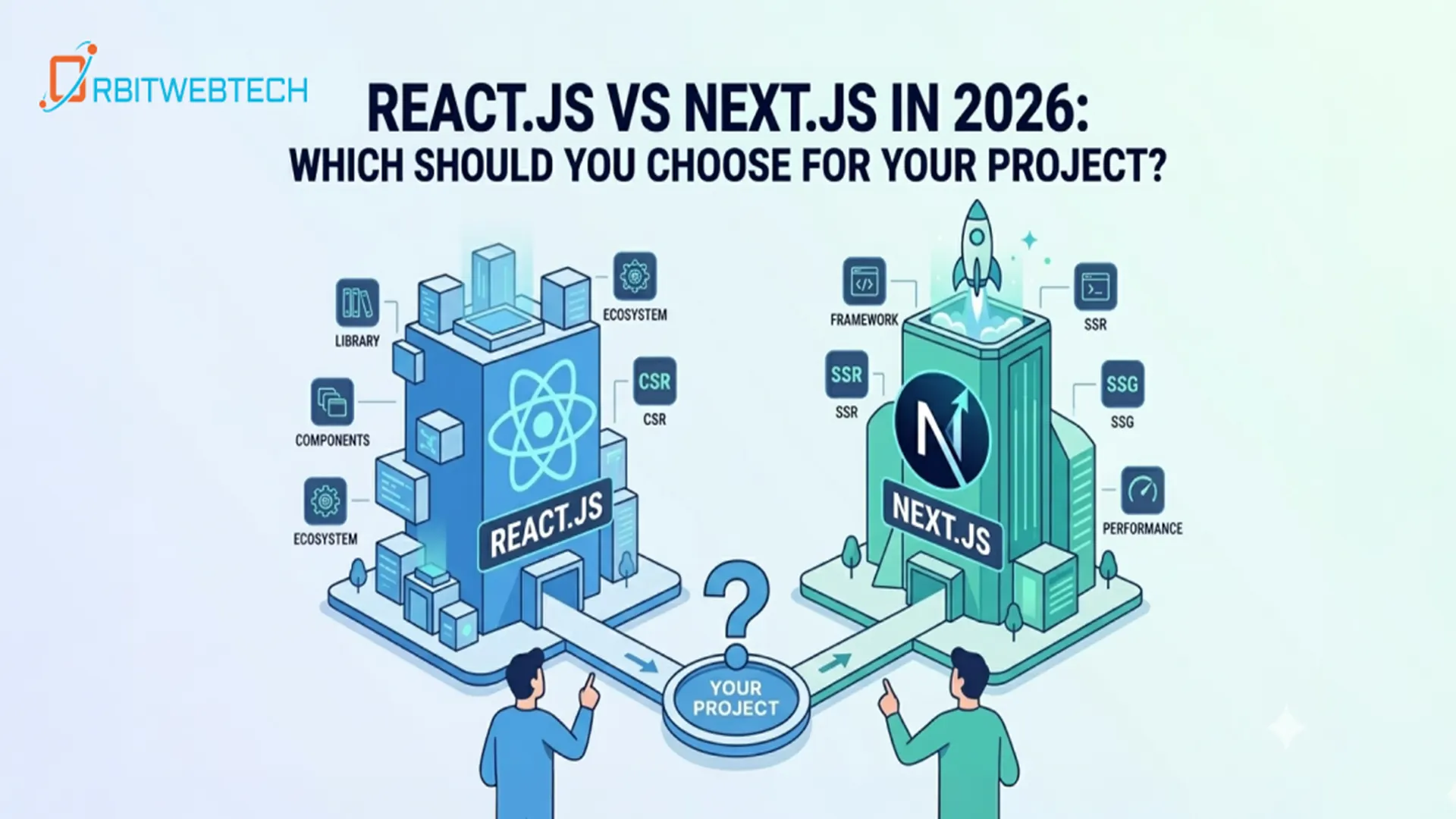
At the same time, developers often compare Next.js vs React when deciding the best technology for a project. While React focuses on building user interfaces, Next.js expands React capabilities by adding features like server-side rendering and improved SEO optimization.
In this comprehensive guide, you will learn what React JS is, how it works, its benefits, real-world use cases, and how it compares with Next.js. This article will help businesses and developers understand why many companies partner with a React JS development company to build scalable digital products.
What is React JS
React JS is an open-source JavaScript library used for building interactive user interfaces. It allows developers to build applications using small, reusable UI components that efficiently update when data changes.
Unlike traditional websites that reload entire pages, React updates only the parts of the interface that change. This results in faster performance and a smoother user experience.
React is especially popular for developing:
- Single-page applications (SPAs)
- Dynamic dashboards
- SaaS platforms
- Mobile applications with React Native
Because of its flexibility and efficiency, React has become one of the most widely used frontend technologies worldwide.
According to the Stack Overflow Developer Survey, React remains one of the most commonly used web frameworks among professional developers.
How React JS Works
React works using a concept called the Virtual DOM (Document Object Model).
The Virtual DOM is a lightweight copy of the real webpage structure. When data changes in the application, React first updates the Virtual DOM and then compares it with the real DOM.
Only the necessary elements are updated in the browser instead of reloading the entire page.
This process improves:
- Website performance
- Application responsiveness
- User experience
Example of a Simple React Component
function Welcome() {
return <h1>Hello, React!</h1>; }
In this example, the Welcome component returns a simple heading that can be reused anywhere in the application.
This component-based architecture is one of the main reasons React is powerful and scalable.
Benefits of React JS for Modern Web Development
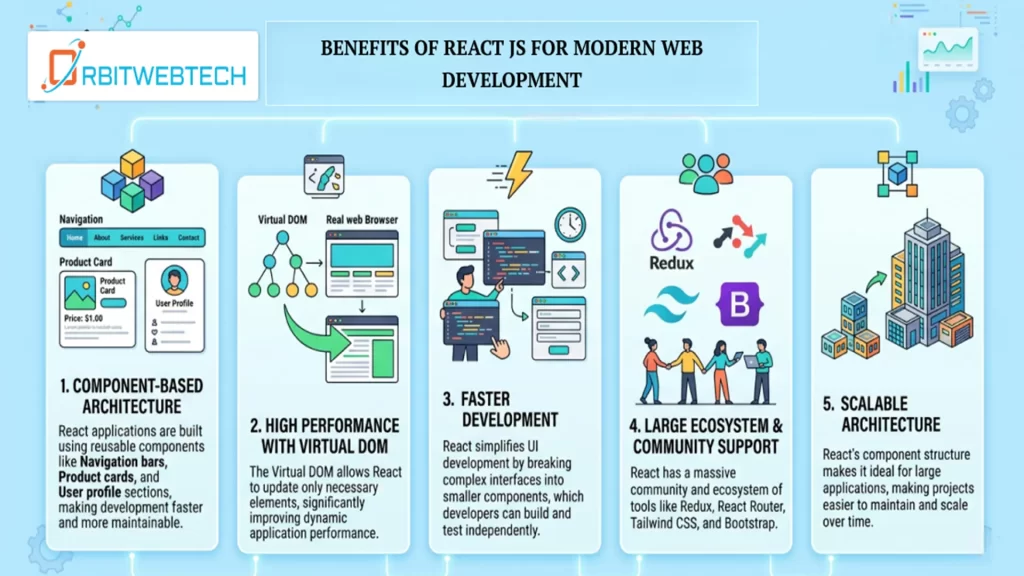
React offers several advantages that make it a preferred technology for developers and businesses.
1. Component-Based Architecture
React applications are built using reusable components.
For example:
- Navigation bar
- Product cards
- User profile section
These components can be reused across multiple pages, making development faster and more maintainable.
2. High Performance with Virtual DOM
The Virtual DOM allows React to update only the necessary elements instead of reloading the entire webpage.
This significantly improves performance for dynamic applications.
3. Faster Development
React simplifies UI development by breaking complex interfaces into smaller components.
Developers can build and test each component independently.
4. Large Ecosystem and Community Support
React has a massive developer community and ecosystem of tools including:
- Redux for state management
- React Router for navigation
- Tailwind CSS for styling
- Bootstrap for responsive design
5. Scalable Architecture
React is ideal for large applications because its component structure makes it easier to maintain and scale projects over time.
React JS with Bootstrap for Responsive UI
Many developers combine React JS with Bootstrap to quickly build responsive and professional interfaces.
Bootstrap provides:
- Pre-built UI components
- Responsive grid systems
- Mobile-first design
Using React JS with Bootstrap allows developers to focus more on functionality rather than styling from scratch.
Example Use Case
A startup building a SaaS dashboard might use:
- React for dynamic components
- Bootstrap for layout and responsiveness
This combination speeds up development while maintaining a consistent design system.
Next.js vs React Understanding the Difference
One of the most common questions in modern web development is Next.js vs React.
Although they are closely related, they serve different purposes.
| Feature | React JS | Next.js |
| Type | JavaScript Library | React Framework |
| Rendering | Client-side rendering | Server-side & static rendering |
| SEO | Limited by default | SEO optimized |
| Routing | Requires external library | Built-in routing |
| Performance | Good | Excellent |
React is mainly focused on building user interfaces.
Next.js is a framework built on top of React that adds additional features such as:
- Server-side rendering (SSR)
- Static site generation (SSG)
- Built-in routing
- API routes
These features make Next.js particularly powerful for SEO-focused websites.
React vs Next.js Which One Should You Choose
Choosing between Next.js vs React depends on your project goals.
Choose React JS When
- Building dashboards or SaaS platforms
- Creating internal tools
- SEO is not the main focus
- You need flexible architecture
Choose Next.js When
- Building SEO-focused websites
- Creating blogs or marketing pages
- You need faster page loading
- Server-side rendering is required
Many businesses consult a React JS development company to determine the best technology stack for their projects.
Real World Use Cases of React JS
React is used by some of the largest companies in the world.
Popular Platforms Built with React
- Netflix
- Airbnb
- Shopify
Example Business Scenario
A company building a project management SaaS platform might choose React because:
- The interface updates frequently
- Real-time user interactions are required
- Components can be reused across multiple modules
This makes React ideal for modern digital products.
How a React JS Development Company Helps Businesses
A professional React JS development company helps organizations build high-performance applications using modern development practices.
Typical services include:
- Custom React web development
- React application migration
- UI/UX development with React
- API integration
- Performance optimization
Working with experienced developers ensures:
- clean architecture
- optimized performance
- scalable applications
Conclusion
React JS continues to be one of the most powerful technologies for building modern web applications. Its component-based architecture, performance optimization, and large ecosystem make it a top choice for developers and businesses worldwide.
While React focuses on building dynamic user interfaces, frameworks like Next.js enhance React by adding server-side rendering and improved SEO capabilities. Understanding the differences between Next.js vs React helps developers choose the right solution based on their project needs.
Whether you are developing a SaaS platform, enterprise dashboard, or modern web application, working with an experienced React JS development company can ensure your project is scalable, optimized, and future-ready.
As web technologies continue to evolve, React JS remains a key foundation for building fast, interactive, and scalable digital experiences.
FAQs
Which framework is better for SEO optimization, Next.js or React?
Next.js is better for SEO optimization because it supports server-side rendering and static site generation. These features help search engines crawl and index pages more efficiently.
What are the main differences between a framework and a library for web interfaces?
A library like React provides specific tools for building UI components. A framework like Next.js provides a complete structure for building web applications, including routing and rendering.
What are the key differences between Next.js and React for building web apps?
React focuses on building UI components, while Next.js extends React with additional features such as server-side rendering, routing, and performance optimization.
When should I choose the opinionated web framework over the flexible UI library for a new project?
Choose a framework like Next.js when SEO, performance, and scalability are top priorities. Use React when you need more flexibility and customization.
Can I use Next.js and React together in the same project?
Yes. Next.js is built on top of React, meaning every Next.js application uses React components internally.
Is React JS good for scalable web applications?
Yes. React’s component-based architecture makes it highly scalable and suitable for complex applications.
Do large companies use React JS?
Yes. Companies like Meta, Netflix, Airbnb, and Uber use React to build interactive user interfaces and scalable applications.