Artificial Intelligence is no longer limited to research labs. From chatbots and automation to predictive analytics and computer vision, AI is transforming every industry. If you want to build a career in AI, the first and most important step is to learn Python.
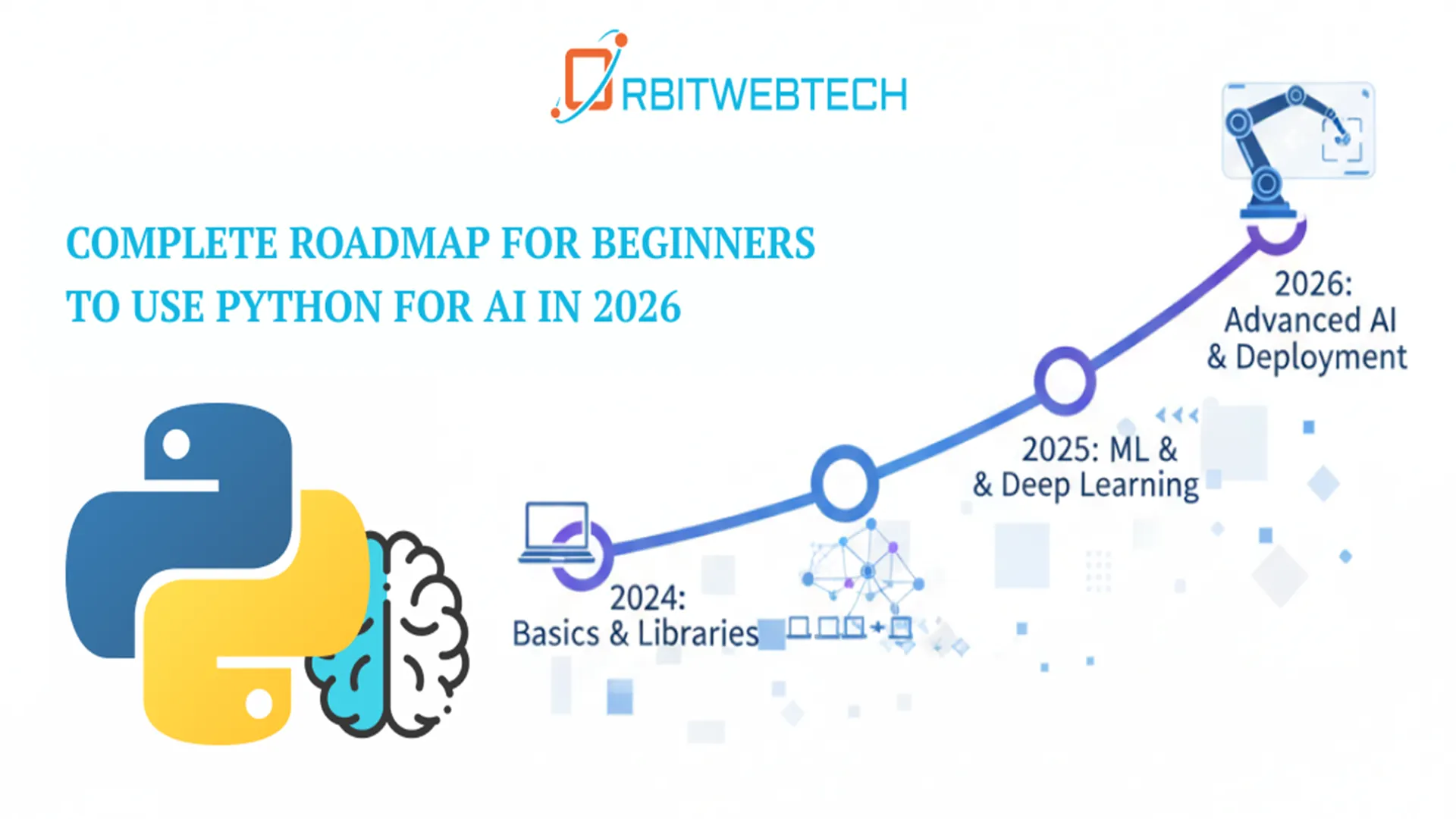
In this detailed roadmap, you will understand how to go from absolute beginner to AI professional using python programming in 2026. This guide follows practical industry standards, updated tools, and a structured learning path aligned with real-world requirements.
Why Python is the Backbone of AI in 2026
Python remains the dominant language in AI because of:
- Clean and readable syntax
- Massive AI and machine learning libraries
- Strong developer community
- Enterprise adoption across industries
- Seamless integration with data science tools
If you are planning to learn python programming for AI, you are choosing a language that powers TensorFlow, PyTorch, Scikit-learn, OpenCV, and many other production-level systems.
Phase 1: Python for Beginners Foundation
Before jumping into AI frameworks, you must build a solid foundation.
1. Install Python Properly
Start with python download from the official website (python.org). Always install the latest stable version and configure:
- Add Python to system PATH
- Install pip package manager
- Setup virtual environments (venv)
For beginners, installing Anaconda is also helpful for AI projects.
2. Core Python Programming Concepts
To master python for beginners, focus on:
- Variables and Data Types
- Lists, Tuples, Dictionaries, Sets
- Conditional Statements
- Loops
- Functions
- Object Oriented Programming
- File Handling
- Exception Handling
Do not skip OOP. AI frameworks heavily use classes and objects.
3. Practice Consistently
Theory is not enough. Practice on:
- HackerRank
- LeetCode
- CodeWars
- Build small automation scripts
If you want to learn python deeply, solve at least 100 small problems before moving ahead.
Phase 2: Intermediate Python for AI
Once you are comfortable with python programming basics, move to intermediate concepts.
1. Important Python Libraries
You must master:
- NumPy (Numerical computing)
- Pandas (Data manipulation)
- Matplotlib and Seaborn (Data visualization)
- Requests (API handling)
These libraries form the base of AI and data science.
2. Data Structures and Algorithms
AI engineers must understand:
- Time and Space Complexity
- Searching and Sorting
- Recursion
- Basic Graph and Tree structures
Strong DSA knowledge improves problem solving and interview performance.
3. Work on Real Datasets
Download datasets from:
- Kaggle
- UCI Machine Learning Repository
- Google Dataset Search
Apply your python programming skills to clean, analyze, and visualize real data.
Phase 3: Machine Learning Fundamentals
After mastering core python online courses and practical coding, move to machine learning.
1. Learn Scikit-learn
Start with:
- Linear Regression
- Logistic Regression
- Decision Trees
- Random Forest
- KNN
- SVM
Understand model evaluation metrics:
- Accuracy
- Precision
- Recall
- F1 Score
- Confusion Matrix
2. Mathematics for AI
You do not need a PhD, but you must understand:
- Linear Algebra (Matrices, Vectors)
- Probability
- Statistics
- Gradient Descent
Without math, AI becomes copy-paste coding.
Phase 4: Deep Learning in 2026
Deep learning is dominating AI innovation.
1. Learn TensorFlow or PyTorch
In 2026, PyTorch is widely preferred for research and startups, while TensorFlow is common in enterprise systems.
Focus on:
- Neural Networks
- CNN for computer vision
- RNN and Transformers for NLP
- Transfer Learning
- Model Deployment
2. Build AI Projects
To become job ready, build:
- Image classifier
- Sentiment analysis model
- Chatbot
- Resume screening tool
- AI powered recommendation system
Portfolio matters more than certificates.
Phase 5: Advanced AI and Specialization
Once comfortable, choose a specialization:
- Natural Language Processing
- Computer Vision
- Generative AI
- AI Automation
- AI for Finance
- AI for Healthcare
Advanced tools to explore:
- Hugging Face
- LangChain
- OpenAI APIs
- FastAPI for deployment
- Docker for containerization
Best Way to Learn Python Online in 2026
If you prefer python online learning, choose structured platforms:
- Coursera
- Udemy
- edX
- DataCamp
- Official Python documentation
But remember: watching videos is not equal to learning. Build projects.
Common Mistakes Beginners Make
When trying to learn python programming, avoid:
- Jumping directly into AI without basics
- Ignoring math fundamentals
- Copying code without understanding
- Avoiding Git and version control
- Not building a public portfolio
Career Opportunities After Learning Python for AI
Once you master python programming for AI, career paths include:
- AI Engineer
- Machine Learning Engineer
- Data Scientist
- NLP Engineer
- Computer Vision Engineer
- AI Research Associate
- Automation Engineer
In 2026, companies are not just hiring coders. They are hiring problem solvers.
Why Businesses Prefer to Hire Python Developer for AI Projects
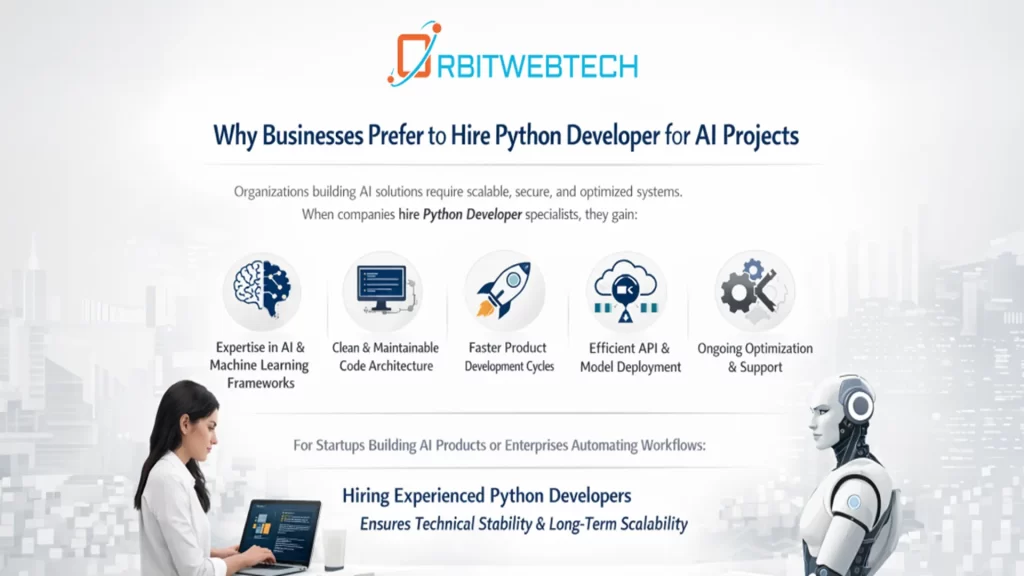
Organizations building AI solutions require scalable, secure, and optimized systems. When companies Hire Python Developer specialists, they gain:
- Expertise in AI and machine learning frameworks
- Clean and maintainable code architecture
- Faster product development cycles
- Efficient API and model deployment
- Ongoing system optimization and support
Whether it is a startup building an AI product or an enterprise automating workflows, hiring experienced Python developers ensures technical stability and long-term scalability.
Final Roadmap Summary
Here is your clear step-by-step plan:
- Python download and setup
- Master python for beginners fundamentals
- Practice daily coding problems
- Learn NumPy and Pandas
- Study Machine Learning with Scikit-learn
- Understand mathematics behind AI
- Learn Deep Learning frameworks
- Build real AI projects
- Deploy projects
- Specialize in one AI domain
If you consistently follow this roadmap for 8 to 12 months, you can transition from beginner to AI-ready professional.
Conclusion
To succeed in AI in 2026, you must first learn python with clarity, discipline, and practical exposure. Python programming is not just about syntax; it is about building intelligent systems that solve real-world problems.
Whether you choose to learn python online or through offline mentorship, focus on building skills, not just completing courses. The demand for AI professionals will continue to grow, and mastering python for beginners today can open high-paying career opportunities tomorrow.
Start today. Download Python. Write your first line of code. Build consistently. The future of AI is waiting.