Introduction
Choosing the right backend framework is one of the most important decisions when building a website or web application. In 2026, Django and Laravel continue to be among the most trusted frameworks for developers and businesses. Both are mature, secure, and capable of building high-quality applications, but they serve different needs.
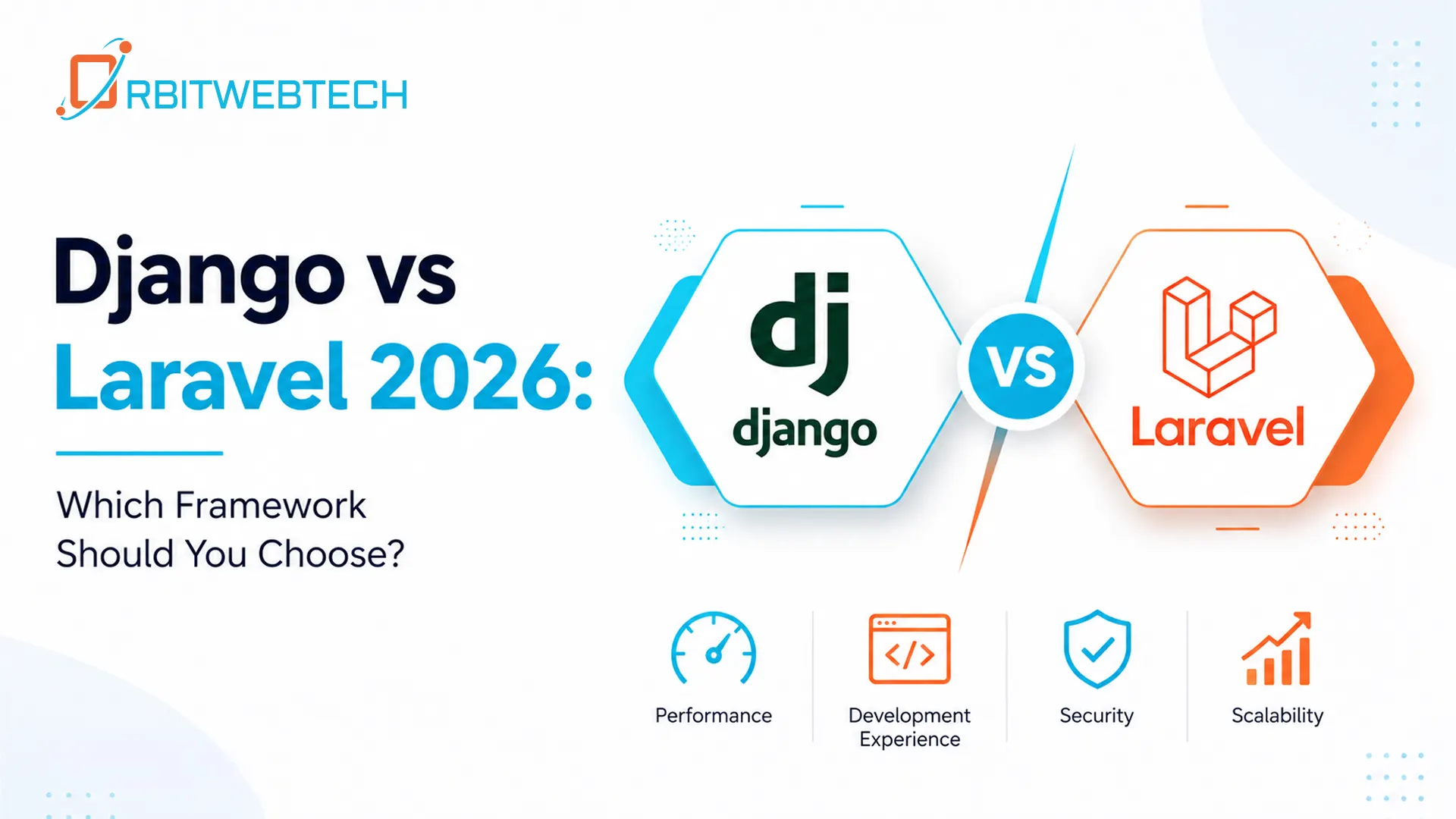
If you’re comparing Django vs Laravel 2026, this guide explains the differences in features, performance, security, development speed, and ideal use cases so you can make an informed decision.
If you’re planning a custom project, Orbit Web Tech offers Custom Web Development Services that help businesses choose the right technology stack based on their goals.
What Is Django?
Django is a high-level Python framework designed for building secure, scalable, and data-driven web applications. It follows the “batteries included” approach, meaning many useful features are available without installing additional packages.
Django is commonly used for:
- Business applications
- AI-powered platforms
- Healthcare systems
- Educational portals
- Enterprise software
- Data-driven applications
Its built-in security features and clean architecture make it popular among startups and large organizations.
What Is Laravel?
Laravel is a PHP framework known for its elegant syntax and developer-friendly ecosystem. It simplifies common development tasks while providing excellent flexibility for custom applications.
Laravel is widely used for:
- Business websites
- CRM systems
- E-commerce platforms
- Booking systems
- Customer portals
- SaaS applications
Laravel offers many built-in tools that help developers build applications quickly.
Django vs Laravel 2026: Quick Comparison
| Feature | Django | Laravel |
|---|---|---|
| Language | Python | PHP |
| Learning Curve | Moderate | Easy to Moderate |
| Performance | Excellent | Very Good |
| Security | Excellent | Excellent |
| AI Integration | Excellent | Good |
| Enterprise Projects | Excellent | Very Good |
| Community Support | Large | Very Large |
| Development Speed | Fast | Fast |
| Scalability | Excellent | Excellent |
Performance Comparison
Performance depends on application architecture, hosting, database optimization, and caching rather than the framework alone.
Django Performance
Django performs exceptionally well for applications handling complex business logic and large datasets. Python’s ecosystem makes it a preferred option for AI and data processing applications.
Best for:
- Machine learning platforms
- Analytics systems
- Enterprise applications
Laravel Performance
Laravel delivers strong performance for most business websites and applications. Features like caching, queue management, and optimized database queries help improve response times.
Best for:
- Business portals
- Online stores
- Customer management systems
- Booking platforms
Security Comparison
Security is one of the biggest reasons developers choose these frameworks.
Django Security Features
Django includes protection against:
- SQL Injection
- Cross-Site Scripting (XSS)
- Cross-Site Request Forgery (CSRF)
- Clickjacking
- Session attacks
Many security features are enabled by default.
Laravel Security Features
Laravel also provides strong security through:
- CSRF Protection
- Authentication
- Authorization
- Password Hashing
- Secure Routing
- Encryption
Both frameworks follow modern security practices.
Development Speed
When comparing Django vs Laravel, both frameworks help reduce development time.
Django
Django provides:
- Built-in admin panel
- ORM
- Authentication
- Forms
- URL routing
- Testing tools
This reduces the need for third-party packages.
Laravel
Laravel includes:
- Artisan CLI
- Eloquent ORM
- Blade Templates
- Authentication
- Queue System
- Scheduler
Laravel’s developer experience makes rapid development easier.
Scalability
Modern businesses need applications that can grow with increasing users.
Django
Django powers applications serving millions of users and is suitable for:
- Enterprise platforms
- AI products
- SaaS applications
- Data-intensive software
Laravel
Laravel also scales well when combined with proper infrastructure and cloud hosting.
It works well for:
- Growing startups
- Multi-tenant SaaS
- Large eCommerce websites
- Business management software
Community and Ecosystem
Both frameworks have active developer communities.
Django
Benefits include:
- Strong Python ecosystem
- Excellent documentation
- Thousands of packages
- Long-term stability
Laravel
Laravel offers:
- Large PHP community
- Extensive package ecosystem
- Laravel Forge
- Laravel Vapor
- Laravel Nova
- Comprehensive documentation
Django vs Laravel for AI Applications
One major advantage of Django is its integration with Python’s AI and machine learning libraries.
If your application requires:
- Artificial Intelligence
- Data Analytics
- Automation
- Predictive Models
- Machine Learning
Django is generally the stronger option because it works naturally with Python libraries.
Django vs Laravel for Business Websites
If you’re building:
- Corporate websites
- Customer portals
- CRM software
- ERP systems
- Inventory management
- Booking applications
Both frameworks can deliver excellent results.
The better choice depends on:
- Project requirements
- Existing technology stack
- Budget
- Development timeline
- Long-term maintenance
Cost of Development
Project cost depends more on:
- Features
- Complexity
- Design
- Third-party integrations
- Team size
- Maintenance
Rather than choosing Django or Laravel solely based on cost, focus on selecting the framework that best matches your business objectives.
When Should You Choose Django?
Choose Django if your project requires:
- AI or Machine Learning
- Data-heavy applications
- Enterprise systems
- High security
- Long-term scalability
- Python ecosystem integration
When Should You Choose Laravel?
Laravel is a great choice for:
- Business websites
- E-commerce platforms
- CRM software
- SaaS applications
- Customer portals
- Fast development cycles
How Orbit Web Tech Can Help
Selecting the right framework requires understanding your business goals, expected traffic, future growth, and integration needs. At Orbit Web Tech, we develop secure and scalable web applications using technologies that fit your project requirements.
Our expertise includes:
- Custom Web Development
- Laravel Development
- Django Development
- Front-End Development
- Back-End Development
- AI & Automation Solutions
- Website Maintenance
Frequently Asked Questions
Which is better, Django or Laravel in 2026?
Neither framework is universally better. Django is often preferred for AI, data-intensive, and enterprise applications, while Laravel is an excellent choice for business websites, CRM systems, eCommerce, and SaaS platforms.
Is Django faster than Laravel?
Both frameworks can deliver excellent performance when properly optimized. Actual speed depends on application architecture, database design, caching, hosting, and server configuration.
Is Django more secure than Laravel?
Both frameworks provide strong built-in security features. Following secure coding practices and keeping dependencies updated is more important than the framework itself.
Which framework is easier to learn?
Laravel is generally easier for developers familiar with PHP. Django is straightforward for those with Python experience and offers many built-in features that simplify development.
Which framework is better for scalable applications?
Both Django and Laravel support scalable architectures. The best option depends on your project’s technical requirements, expected growth, and integration needs.