Introduction
Modern web applications need more than good code. They also need reliable hosting, simple deployment, secure infrastructure, and the ability to handle changes in traffic without creating unnecessary technical work. This is where Laravel Cloud can be useful for businesses building applications with Laravel.
Laravel is one of the most widely used PHP frameworks for developing structured and maintainable web applications. However, managing servers, deployments, environments, queues, databases, and application performance can become complicated as a project grows.
Laravel Cloud provides a managed environment designed specifically for Laravel applications. It helps development teams deploy and operate Laravel projects without having to manage every part of the underlying infrastructure manually.
For businesses considering Laravel for a new application or looking to improve an existing Laravel project, understanding how Laravel Cloud works can help with making better hosting and development decisions.
What Is Laravel Cloud?
Laravel Cloud is a managed cloud platform designed for Laravel applications. It provides infrastructure and deployment tools that help developers run Laravel applications without building and maintaining the entire server environment themselves.
Instead of manually configuring servers for every Laravel project, developers can use a managed environment to deploy applications, configure environments, connect databases, and manage application resources.
This can be particularly useful for teams that want to spend more time working on application features rather than routine infrastructure management.
For companies planning a new Laravel project, Laravel development services from Orbit Web Tech can also be considered when deciding how the application should be developed, deployed, and maintained.
Why Laravel Cloud Matters for Modern Applications
A web application can start as a relatively simple project and become much more demanding as its user base grows. More users can mean more database queries, background jobs, API requests, file processing, and server resources.
Traditional hosting can work well for smaller applications, but teams may eventually need more control over deployment and infrastructure.
Laravel Cloud addresses part of this challenge by providing an environment built around Laravel applications.
Some potential advantages include:
- Easier Laravel application deployment
- Managed infrastructure
- Simplified environment configuration
- Support for application scaling
- Easier management of production environments
- Less routine server administration
- A development workflow designed around Laravel
The right setup still depends on the application’s architecture, traffic, database requirements, and business objectives.
How Laravel Cloud Works
Laravel Cloud sits between the development team and the underlying infrastructure.
A typical Laravel application development process may look like this:
1. Develop the Laravel Application
Developers build the application using Laravel and its ecosystem. This could include authentication, APIs, database models, queues, scheduled tasks, payment integrations, or custom business functionality.
2. Connect the Application Repository
The project can be connected to its source code repository so that the application can be deployed through a controlled development workflow.
3. Configure the Environment
The application needs environment variables, database connections, application settings, storage configuration, and other production requirements.
4. Deploy the Application
Once the application is ready, it can be deployed to the configured cloud environment.
5. Monitor and Maintain the Application
After deployment, developers can continue improving the application while managing its production environment and resources.
This approach can make Laravel deployment easier to manage compared with manually configuring every server component.
Laravel Cloud vs Traditional Hosting
Choosing between Laravel Cloud and traditional hosting depends on the project.
Traditional hosting may be sufficient for a small website or application with limited infrastructure requirements. However, a larger Laravel application may need more control over deployments, application resources, queues, databases, and scaling.
Traditional Hosting
With traditional hosting, the development team may need to manage:
- Server configuration
- PHP versions
- Web server settings
- Deployment processes
- Security updates
- Database configuration
- Application monitoring
- Server scaling
This can provide greater control but also creates additional responsibilities.
Laravel Cloud
A managed Laravel environment can reduce some of this infrastructure work.
Developers can focus more closely on:
- Application development
- Feature improvements
- Database design
- API development
- User experience
- Business logic
The goal is not to eliminate technical infrastructure. Instead, it can make the infrastructure required for a Laravel application easier to manage.
Benefits of Laravel Cloud for Businesses
- Simplified Laravel Application Hosting
Managing Laravel hosting can become complicated when an application requires multiple services and environments.
A Laravel-focused cloud platform provides infrastructure designed around Laravel applications, making it easier for development teams to organize deployment and hosting requirements.
2. Easier Deployment
Deployment is an important part of modern software development.
A good deployment process should reduce unnecessary manual steps and make it easier to move tested code into production.
Laravel Cloud can help create a more organized Laravel deployment workflow.
3. Better Scalability
Applications do not always receive the same amount of traffic.
An online platform may have normal traffic during most of the week but experience significant increases during promotions, product launches, or seasonal events.
Cloud infrastructure can make it easier to allocate resources as application requirements change.
4. Less Server Administration
Developers should not have to spend all their time maintaining servers.
Managed infrastructure can reduce the amount of routine server work required, allowing development teams to concentrate on building and improving the application.
Suitable for Growing Laravel Applications
Laravel Cloud can be considered for applications that are moving beyond basic shared hosting and require a more structured production environment.
Examples include:
- SaaS platforms
- Customer portals
- Business management systems
- E-commerce applications
- Booking platforms
- CRM applications
- Custom dashboards
- API-driven applications
Laravel Cloud for SaaS Applications
SaaS applications often have more complex infrastructure requirements than standard websites.
A SaaS platform may need user authentication, subscriptions, databases, queues, notifications, APIs, scheduled tasks, and background processing.
Laravel provides tools for developing many of these application features, while Laravel Cloud can provide an environment for running the application.
For companies developing a SaaS product, the combination of Laravel web development and cloud infrastructure can provide a practical foundation for building and maintaining the platform.
Laravel Cloud and Application Performance
Hosting is only one part of application performance.
A Laravel application can still perform poorly if the code, database queries, caching strategy, assets, or application architecture are not optimized.
Developers should consider:
- Database indexing
- Query optimization
- Caching
- Queue management
- Image optimization
- API response times
- Efficient application architecture
- Front-end asset delivery
- Error monitoring
Laravel Cloud can provide the infrastructure, but application-level optimization remains the responsibility of the development team.
This is why experienced Laravel developers should evaluate both the application code and hosting environment when improving performance.
Laravel Cloud Security Considerations
Cloud hosting does not automatically make an application secure.
A secure Laravel application should still follow good development practices.
Important areas include:
- Environment Variables
Sensitive configuration such as database credentials and API keys should be handled securely.
2. Authentication
Applications should use appropriate authentication and authorization mechanisms to prevent unauthorized access.
3. Database Security
Database credentials should be protected, and applications should use secure database connections and appropriate access controls.
4. Dependency Updates
Laravel applications depend on third-party packages. Keeping Laravel and its dependencies updated can help address known security vulnerabilities.
5. HTTPS
Production applications should use HTTPS to protect data transferred between users and the application.
Security should be considered during development rather than added only after an application is launched.
When Should You Consider Laravel Cloud?
Laravel Cloud may be worth considering when:
- You are building a new Laravel application.
- Your existing application is growing.
- Your team wants a simpler deployment workflow.
- Server administration is taking development time.
- Your application needs a more flexible cloud environment.
- You expect traffic or infrastructure requirements to increase.
- You are developing a SaaS or business application.
For a small Laravel website with very limited requirements, traditional hosting may still be enough.
The important point is to select infrastructure based on the application’s actual requirements rather than choosing a hosting solution simply because it is newer.
Laravel Cloud and Laravel Development Services
Hosting and development should be considered together.
A poorly structured application can create performance and maintenance problems regardless of the hosting platform. Similarly, a well-developed application can still suffer from infrastructure problems if the production environment is not configured correctly.
A Laravel development project can include:
- Custom Laravel application development
- Laravel API development
- Database development
- Third-party API integrations
- Business management applications
- SaaS development
- Application maintenance
- Performance optimization
The development approach should be based on the application’s users, functionality, integrations, security requirements, and expected growth.
Laravel Cloud vs Other Cloud Hosting Options
Laravel Cloud is not the only option available for Laravel applications.
Businesses can also consider infrastructure from providers such as AWS, Google Cloud, Microsoft Azure, DigitalOcean, or other managed hosting platforms.
The main difference is the amount of infrastructure management required.
With a more general cloud provider, developers may have greater flexibility but may also need to configure more infrastructure themselves.
A Laravel-focused platform can be attractive when the priority is a simpler Laravel-specific deployment and management experience.
The best option depends on:
- Application size
- Expected traffic
- Development team expertise
- Infrastructure requirements
- Budget
- Database architecture
- Security requirements
- Scaling requirements
How to Prepare a Laravel Application for Cloud Deployment
Before moving a Laravel application to a cloud environment, developers should review the application carefully.
- Review the Codebase
Remove unnecessary dependencies, identify technical problems, and make sure the application follows a maintainable structure.
2. Optimize the Database
Review slow queries, indexes, relationships, and database configuration.
3. Configure Environment Variables
Separate development and production configuration and ensure sensitive credentials are not stored directly in source code.
4. Test Background Jobs
If the application uses queues, verify that jobs process correctly and failures are handled appropriately.
5. Test File Storage
Applications that handle documents, images, or other files should have a clear storage strategy.
Is Laravel Cloud Right for Your Application?
There is no single hosting solution that works for every Laravel project.
Laravel Cloud can be a strong option for teams that want a Laravel-focused managed environment and a simpler approach to application deployment and infrastructure management.
However, the decision should be based on the application’s technical requirements, development workflow, expected traffic, budget, and long-term plans.
If you are planning a new Laravel application or considering moving an existing project to a cloud environment, start by evaluating the application architecture and infrastructure requirements.
Frequently Asked Questions
What is Laravel Cloud?
Laravel Cloud is a managed cloud platform designed for deploying and running Laravel applications. It provides infrastructure and deployment capabilities specifically suited to Laravel projects.
Is Laravel Cloud suitable for SaaS applications?
Yes. Laravel Cloud can be considered for SaaS applications that require a managed environment for running Laravel-based applications. The infrastructure should still be selected according to the application’s traffic, database, storage, and scaling requirements.
Is Laravel Cloud the same as Laravel hosting?
Laravel Cloud is a Laravel-focused managed cloud platform. Traditional Laravel hosting can include shared hosting, VPS hosting, dedicated servers, or general cloud infrastructure.
Can an existing Laravel application be moved to Laravel Cloud?
An existing Laravel application may be migrated if its architecture and dependencies are compatible with the target environment. Before migration, developers should review the database, storage, environment variables, queues, scheduled tasks, and deployment process.
Do I still need Laravel developers if I use Laravel Cloud?
Yes. Laravel Cloud handles infrastructure-related tasks, but application development, database architecture, security, feature development, testing, and optimization still require development expertise.
Final Thoughts
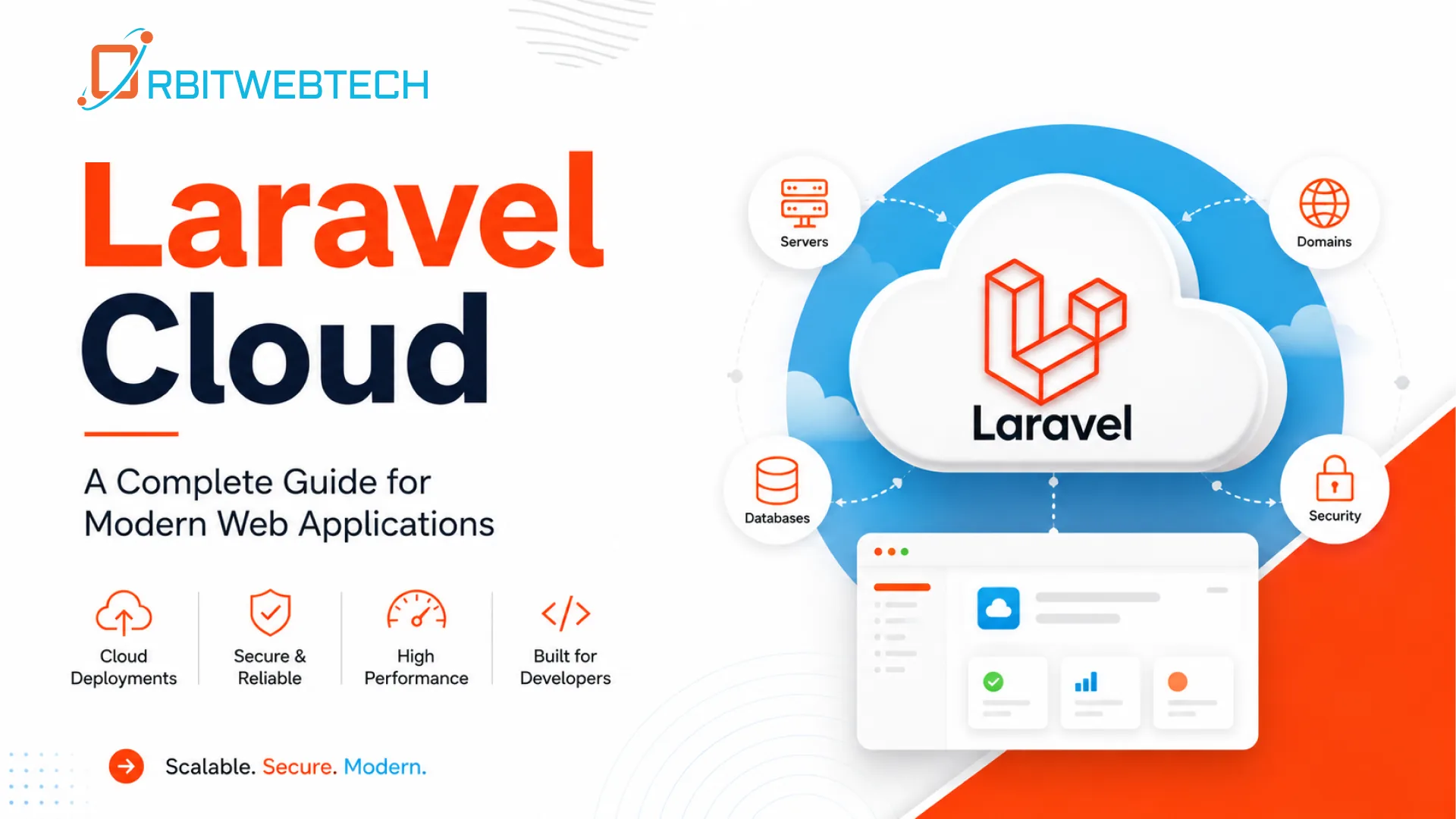
Laravel Cloud: A Complete Guide for Modern Web Applications shows why application hosting should be considered alongside development and architecture.
Laravel provides a strong framework for building custom web applications, while a managed cloud environment can simplify deployment and infrastructure management.
For businesses developing SaaS platforms, customer portals, business applications, APIs, or other custom software, the right combination of Laravel development, cloud hosting, application security, and performance optimization can create a more manageable production environment.
The most important step is to choose infrastructure based on the application’s real requirements. A properly planned Laravel application can then grow as the business and its users grow.