Introduction
Modern businesses rely on multiple applications to manage customers, process payments, track information, and handle daily operations. However, when these applications work separately, teams often face duplicated work, disconnected data, and delays in business processes.
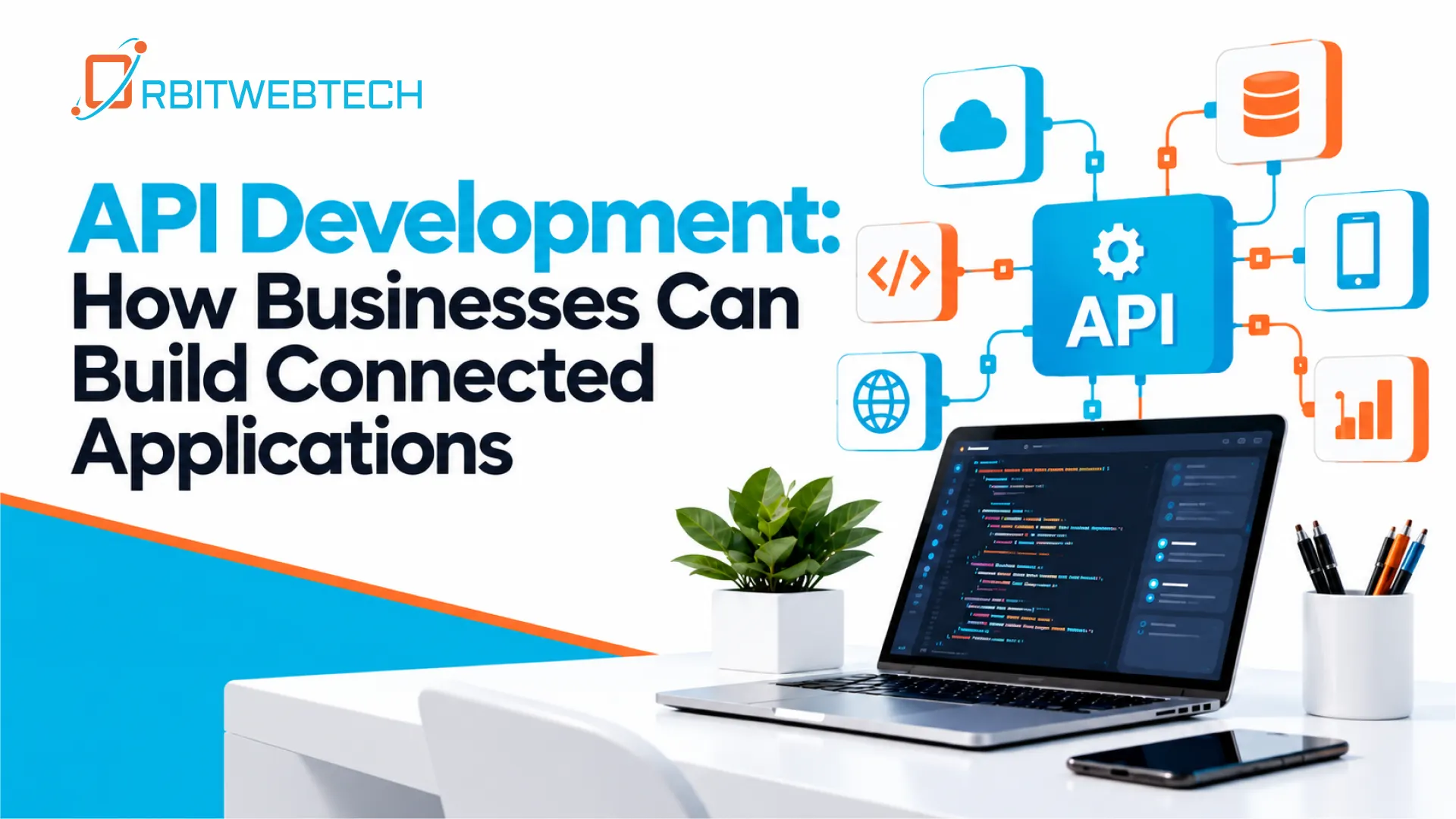
This is where API development becomes useful. APIs allow different software systems to communicate and exchange information, helping businesses connect their applications and simplify everyday tasks.
Whether you run an e-commerce store, a service-based business, or a growing enterprise, understanding how API development works can help you make better technology decisions. With the right API development approach, businesses can build connected applications that share data securely, improve workflows, and support future growth.
In this guide, we explore what API development is, how it works, its business benefits, common types of APIs, and what to consider when building connected applications.
What Is API Development?
API development is the process of designing, building, testing, and maintaining application programming interfaces (APIs) that allow different software systems to communicate with one another.
An API acts as a bridge between applications. Instead of building every feature from scratch, developers can use APIs to connect existing systems and exchange specific information.
For example, imagine an online shopping website. When a customer places an order, several activities happen behind the scenes:
The website sends order information to the backend system.
A payment gateway processes the payment.
The inventory system updates product availability.
The customer receives an order confirmation.
The business can track the order through its management system.
APIs help these systems exchange information so the entire process works smoothly.
For businesses, API development makes it easier to connect software, automate repetitive tasks, and provide consistent experiences across different platforms.
How Does API Development Work?API development follows a structured process that allows applications to request, exchange, and process information.
Here is a simplified explanation of how it works.
1. A Request Is Sent
One application sends a request to another application through an API. This request may ask for information, submit data, or trigger an action.
For example, a travel booking application might request available hotel rooms from a hotel management system.
2. The API Processes the Request
The API receives the request and checks whether it is valid. Depending on the system, it may also verify authentication, permissions, and required information.
3. The Server Performs the Action
The receiving application processes the request. It may retrieve information from a database, update a record, or communicate with another service.
4. The API Returns a Response
After processing the request, the server sends a response to the requesting application. The response typically includes the requested information or a message explaining the result.
For instance, a booking application may receive a list of available rooms with prices and availability.
This request-and-response process allows separate applications to work together without requiring them to share their internal code or infrastructure.
Types of APIs Businesses Commonly Use
Different business requirements call for different API approaches. Understanding the common types helps organizations choose a suitable solution.
1. REST APIs
REST API development is widely used for web applications and mobile applications. REST APIs commonly use HTTP methods such as GET, POST, PUT, PATCH, and DELETE to retrieve, create, update, and remove resources.
They are often used for:
Connecting websites with backend systems.
Building mobile application backends.
Integrating customer relationship management platforms.
Connecting e-commerce platforms with payment services.
REST APIs are a practical option for many applications because they use familiar web technologies and can support a wide range of integrations.
2. SOAP APIs
SOAP APIs use a structured messaging protocol and commonly exchange data in XML format. They include established standards for messaging and can support enterprise requirements involving formal contracts and security mechanisms.
Businesses may use SOAP APIs when integrating with older enterprise systems, financial applications, or platforms that already depend on SOAP-based communication.
3. GraphQL APIs
GraphQL allows applications to request specific data fields instead of receiving a fixed response structure. This can be useful when an application needs information from multiple related resources.
For example, a customer dashboard may request a customer’s profile, recent orders, and payment details through a single GraphQL query.
GraphQL can help reduce unnecessary data transfer, although it requires careful design, query controls, and performance management.
4. Webhooks
Webhooks allow one application to send data automatically to another application when a specific event occurs.
For example, a payment service can notify an e-commerce website when a transaction succeeds. The website can then update the order status without repeatedly checking the payment service.
Webhooks are useful for event-driven integrations, notifications, and automated workflows.
Key Benefits of API Development for Businesses
Investing in custom API development can help businesses improve how their applications communicate and support their daily operations.
1. Better Application Integration
Businesses often use separate tools for accounting, customer management, marketing, inventory, and payments. API integration services help connect these tools so information can move between them without constant manual updates.
For example, an online store can connect its sales platform with accounting software to automatically share transaction details and reduce repetitive data entry.
2. Improved Operational Efficiency
When applications exchange data automatically, employees spend less time transferring information between systems.
API-based workflows can help businesses:
Reduce manual data entry.
Automate routine business processes.
Minimize errors caused by duplicate records.
Improve communication between departments.
This gives teams more time to focus on work that requires attention and decision-making.
3. Easier Business Expansion
As businesses grow, their software requirements often change. They may introduce new services, launch mobile applications, or connect with additional platforms.
Scalable API development helps businesses extend existing applications and integrate new systems without rebuilding the entire technology infrastructure.
A well-designed API can support new features, additional users, and changing business needs with fewer disruptions.
4. Consistent Customer Experiences
Customers expect a consistent experience whether they interact with a website, mobile application, or customer support platform.
APIs help synchronize customer information across these channels. For example, a customer who updates their contact information through a mobile application can have that information reflected in the connected customer management system.
This reduces inconsistencies and helps businesses provide more reliable service.
5. Secure Data Exchange
Secure API development helps businesses control how applications access and exchange information.
Depending on the requirements, developers can implement:
Authentication and authorization.
Role-based access controls.
HTTPS encryption.
Request validation.
Rate limiting.
Logging and monitoring.
Security should be considered throughout API design and development, particularly when handling customer records, financial information, or other sensitive business data.
Steps to Build Connected Applications Through API Development
Building connected applications requires more than writing code. Businesses need to understand their requirements, select the right integration approach, and plan for security and maintenance.
Step 1: Identify Business Requirements
Start by identifying the applications that need to communicate and the information they need to exchange.
Consider questions such as:
Which business processes need automation?
Which applications need to share data?
What information should each application access?
Are there existing systems or technical limitations?
Clearly defined requirements help avoid unnecessary integrations and keep development focused on business needs.
Step 2: Choose the Right API Architecture
Select an API architecture based on your application requirements, existing infrastructure, data needs, and expected traffic.
REST APIs may work well for conventional web and mobile applications. GraphQL can be useful when clients need flexible data queries, while event-driven integrations and webhooks may be suitable for event-based workflows.
The goal is to choose an approach that meets current requirements while remaining maintainable as the application evolves.
Step 3: Design the API Structure
API design defines how applications communicate, including endpoints, request methods, data formats, authentication, and error responses.
A clear API structure makes integration easier for developers and reduces confusion when applications change.
It is also useful to document API endpoints, expected parameters, response formats, and error codes before implementation.
Step 4: Develop and Integrate the API
Once the design is ready, developers implement the API and connect it with the relevant applications and databases.
This stage may involve backend development, database integration, third-party API integration, and business logic implementation.
The integration should be built around defined permissions and data-sharing requirements rather than giving every connected application unrestricted access.
Step 5: Test API Performance and Security
Testing helps identify problems before connected applications are used in production.
Important testing activities include:
Functional testing to confirm expected responses.
Integration testing to verify communication between systems.
Security testing to identify access-control weaknesses.
Load testing to evaluate performance under expected traffic.
Error handling tests to check how applications respond to failures.
Testing should cover both successful requests and situations in which services are unavailable or data is invalid.
Step 6: Deploy, Monitor, and Maintain
After testing, deploy the API in an appropriate environment and monitor its behavior.
Track response times, error rates, traffic, and unusual activity. Regular maintenance may include security updates, performance improvements, documentation changes, and API version management.
Ongoing monitoring helps businesses identify integration issues before they significantly affect operations.
Challenges Businesses Should Consider in API Development
Although APIs make application integration easier, businesses should plan for several technical and operational challenges.
Data security and privacy: APIs can expose sensitive information if access controls and data protection measures are poorly implemented. Apply the principle of least privilege and follow relevant privacy requirements.
Integration complexity: Connecting older software with modern applications may require additional development, data transformation, or middleware.
Performance and reliability: High request volumes, network delays, and unavailable third-party services can affect connected applications. Caching, rate limits, retries, and appropriate timeout settings can help manage these issues.
API versioning: Changes to an API can affect applications that depend on it. Versioning and clear communication help teams introduce changes while minimizing disruptions.
Maintenance requirements: APIs need ongoing monitoring, documentation, and updates. Businesses should account for these responsibilities when planning development costs and timelines.
Addressing these challenges early can make connected applications easier to manage over time.
Custom API Development vs. Ready-Made APIs
Businesses can choose between building custom APIs and integrating existing APIs provided by third-party platforms.
Custom API development | Ready-made APIs |
|---|---|
Designed around specific business requirements | Designed to provide predefined services |
Greater control over functionality and data exchange | Faster integration for supported features |
Requires development and ongoing maintenance | Depends on the provider’s documentation and service |
Can support unique workflows and internal systems | May have limitations in customization |
Development costs can be higher initially | Pricing may depend on usage or subscription plans |
For example, a business that needs to connect its internal order management system with several specialized tools may benefit from custom API development. A business that simply needs online payments may be able to use an established payment gateway API.
The right choice depends on required functionality, available resources, security needs, and long-term maintenance plans.
How to Choose an API Development Company
Selecting an API development company is an important part of planning a connected application project. Look beyond development cost and consider how well a provider understands your systems and requirements.
Evaluate these factors:
Technical experience: Review experience with REST API development, backend technologies, databases, and third-party integrations relevant to your project.
Security practices: Ask about authentication, authorization, encryption, testing, and secure development processes.
Integration capabilities: Check whether the company can work with your existing software, legacy systems, and external platforms.
Documentation and testing: Make sure the development process includes clear documentation and comprehensive testing.
Maintenance and support: Clarify how the provider handles updates, monitoring, troubleshooting, and future improvements.
Project communication: Look for a clear development process with defined milestones, regular updates, and transparent scope.
A suitable development partner should be able to explain technical decisions in business terms and design a solution that fits your actual requirements.
Build Connected Applications with Orbitwebtech
Connected applications can help businesses reduce manual work, improve data consistency, and create more efficient digital operations. However, the results depend on selecting the right integration approach, building secure APIs, and planning for long-term maintenance.
At Orbitwebtech, we provide web development and custom software development services to help businesses build applications around their operational requirements. Whether you need to connect existing platforms, develop custom APIs, or create an application that works across multiple systems, our team can help you plan and implement a suitable solution.
Explore our web development services to learn how we can support your next application development project.
Frequently Asked Questions
1. What is API development in simple terms?
API development is the process of creating interfaces that allow different software applications to communicate and exchange information. It helps businesses connect tools, automate workflows, and share data between systems.
2. How does API integration help businesses?
API integration connects different software platforms so they can exchange information automatically. It can reduce manual data entry, improve data consistency, streamline operations, and help businesses manage connected workflows.
3. What is the difference between API development and API integration?
API development involves designing, building, and maintaining APIs. API integration involves connecting applications through existing or custom APIs so they can exchange data and work together.
4. Which programming languages are used for API development?
Common languages and technologies include JavaScript with Node.js, Python, PHP, Java, C#, and frameworks such as Express, Django, Laravel, Spring Boot, and ASP.NET Core. The choice depends on the application architecture, existing infrastructure, and project requirements.
5. How much does custom API development cost?
The cost of custom API development depends on the number of integrations, technical complexity, security requirements, development hours, and ongoing maintenance needs. A simple API may require relatively little development, while a complex enterprise integration can require a larger budget.
6. Are APIs secure for business applications?
APIs can support secure data exchange when they are designed and maintained properly. Authentication, authorization, encryption, input validation, rate limiting, and continuous monitoring are important security measures.