Introduction
Email marketing remains one of the most effective ways for ecommerce businesses to connect with customers and encourage repeat purchases. While paid advertising can help bring visitors to your online store, ecommerce email marketing allows you to stay in contact with people who have already shown interest in your products.
So, how can ecommerce email marketing increase online sales?
A well-planned email marketing strategy can help you promote relevant products, recover abandoned carts, bring back previous customers, and encourage repeat purchases. It also gives ecommerce businesses a direct communication channel that does not depend entirely on search engines or social media platforms.
At Orbit Web Tech, we help businesses improve their digital presence through web development, SEO, digital marketing, and technology solutions that support sustainable online growth.
What Is Ecommerce Email Marketing?
Ecommerce email marketing is the process of sending targeted emails to potential and existing customers of an online store.
These emails may include:
- Product recommendations
- Welcome emails
- Special offers
- New product announcements
- Abandoned cart reminders
- Order updates
- Customer follow-up emails
- Re-engagement campaigns
The main goal is not simply to send more promotional messages. Effective ecommerce email marketing focuses on sending useful and relevant emails at the right stage of the customer journey.
How Ecommerce Email Marketing Can Increase Online Sales
Ecommerce businesses often focus heavily on attracting new visitors. However, many visitors leave without making a purchase, and existing customers may not return unless the business gives them a reason.
Email marketing helps solve both problems.
1. Recover Abandoned Carts
Cart abandonment is a common challenge for ecommerce businesses. A customer may add products to their cart but leave before completing the purchase.
An abandoned cart email can remind the customer about the items they were interested in.
For example, an email may include:
- The products left in the cart
- A reminder that the order was not completed
- Product benefits
- A limited-time offer where appropriate
- A direct link back to the checkout page
A simple reminder can encourage customers to return and complete their purchase.
2. Increase Repeat Purchases
Existing customers are often more likely to purchase again than completely new visitors. Ecommerce email marketing makes it easier to stay connected with customers after their first order.
You can send emails about:
- Related products
- Product restocks
- New collections
- Reorder reminders
- Special offers for previous customers
For example, if a customer purchased a specific product several months ago, a targeted email can recommend related products based on their previous purchase.
This approach can help improve customer retention and increase the lifetime value of each customer.
3. Use Personalized Product Recommendations
Personalization can make ecommerce emails more relevant.
Instead of sending the same email to every customer, businesses can use customer data to recommend products based on:
- Previous purchases
- Browsing activity
- Product categories
- Customer interests
- Shopping behavior
Relevant product recommendations can make it easier for customers to discover products they may want to purchase.
However, personalization should be useful and natural. Sending highly specific or excessive messages can have the opposite effect and may cause customers to unsubscribe.
4. Create a Strong Welcome Email Series
A welcome email is often the first marketing message a new subscriber receives from your ecommerce business.
Instead of sending only one generic email, you can create a short welcome email series.
A welcome series may include:
- Email 1: Welcome the Customer
Introduce your business and explain what customers can expect from your emails.
- Email 2: Introduce Popular Products
Share your best-selling or most relevant products.
- Email 3: Build Trust
Include useful information about your products, customer service, delivery, or return process.
A strong welcome email series helps new subscribers become familiar with your business and can encourage their first purchase.
5. Promote New Products to Interested Customers
Email is an effective channel for announcing new products.
Customers who have already subscribed to your emails have shown some level of interest in your business. When you launch a new product, you can notify subscribers directly instead of waiting for them to discover it through search or social media.
For better results, divide your audience into relevant groups. For example, customers who previously purchased men’s products may receive different recommendations from customers interested in women’s products.
This can improve the relevance of your product marketing emails.
6. Bring Back Inactive Customers
Some customers may stop purchasing from your store over time. A re-engagement email campaign can help remind them about your business.
You could send an email with:
- New products
- Recently added services
- A useful update
- A special offer
- A personalized recommendation
The goal is to give inactive customers a genuine reason to return.
Businesses should also monitor engagement. If subscribers consistently do not open or interact with emails, continuing to send them frequent messages may negatively affect email performance.
7. Build Customer Relationships
Email marketing is not only about sales promotions.
Businesses can also use email to provide helpful information, answer common questions, and keep customers informed.
For example, you can send:
- Product guides
- How-to information
- Customer care tips
- Industry updates
- Answers to frequently asked questions
Providing useful content can help customers remember your business and develop greater confidence in your products.
Important Ecommerce Email Marketing Campaigns
A successful ecommerce email strategy often includes several types of automated and promotional campaigns.
- Welcome Emails
Sent when a new subscriber joins your email list.
- Abandoned Cart Emails
Sent when a customer adds products to a cart but does not complete the purchase.
- Order Confirmation Emails
Confirm customer purchases and provide important order information.
Product Recommendation Emails
Suggest products based on customer interests or previous purchases.
Re-Engagement Emails
Encourage inactive subscribers or customers to return.
Post-Purchase Emails
Follow up after a purchase and provide helpful information or recommend related products.
How Website Development Supports Ecommerce Email Marketing
Your website and email marketing strategy should work together.
For example, when a customer clicks a product link in an email, they should be directed to a fast, easy-to-use, and relevant landing page. If the website is slow, confusing, or hard to navigate, you may lose the opportunity to convert that customer.
A well-developed ecommerce website should support:
- Fast page loading
- Mobile-friendly browsing
- Clear product pages
- Simple navigation
- Secure checkout
- Email marketing integration
- Analytics and conversion tracking
Combine Ecommerce Email Marketing With SEO
Email marketing and SEO can support each other.
SEO helps businesses attract new visitors through search engines, while email marketing helps businesses maintain relationships with those visitors after they leave the website.
For example, a business can attract visitors through useful content and then encourage them to subscribe to receive more relevant information.
This creates additional opportunities to:
- Generate repeat website visits
- Promote products
- Build customer relationships
- Encourage repeat purchases
At Orbit Web Tech, businesses can explore digital solutions that combine website development, SEO, and digital marketing to support their wider online goals.
Best Practices for Ecommerce Email Marketing
To increase online sales through email marketing, businesses should focus on relevance and consistency.
Segment Your Email List
Divide subscribers based on factors such as:
- Customer status
- Previous purchases
- Product interests
- Engagement level
This allows you to send more relevant messages.
Write Clear Subject Lines
The subject line should clearly explain what the email contains. Avoid misleading language or unnecessary promotional wording.
Use Clear Calls to Action
Every email should have a clear next step. For example:
- Shop Now
- View Products
- Complete Your Order
- Explore the Collection
Make Emails Mobile-Friendly
Many customers read emails on smartphones. Make sure your emails are easy to read and navigate on smaller screens.
Test Your Campaigns
Monitor important email marketing metrics such as:
- Open rate
- Click-through rate
- Conversion rate
- Revenue generated
- Unsubscribe rate
Testing subject lines, content, calls to action, and sending times can help improve future campaigns.
Conclusion
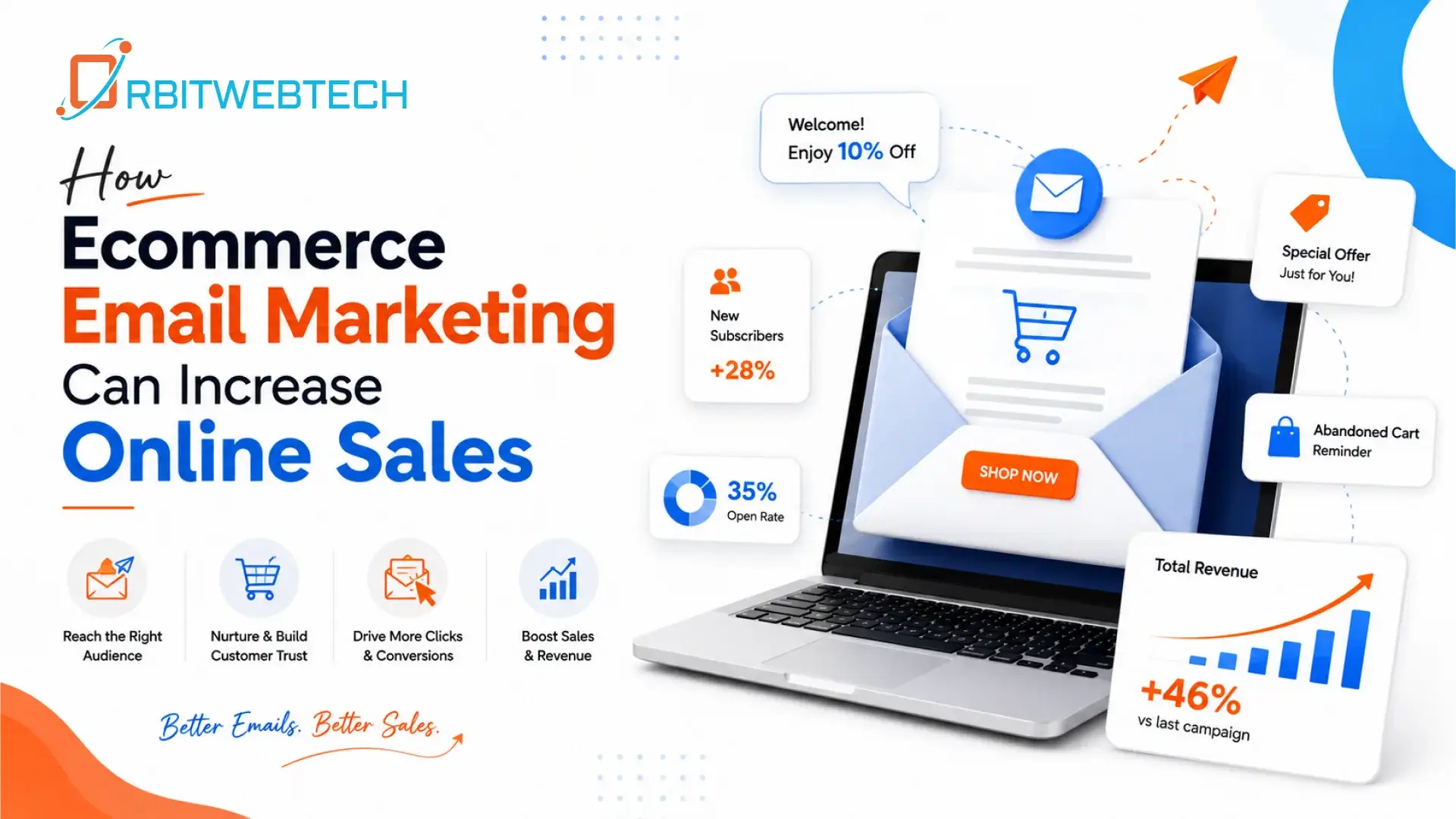
Ecommerce email marketing can increase online sales by helping businesses reconnect with customers, recover abandoned carts, promote relevant products, and encourage repeat purchases.
The most effective strategy is not simply sending more emails. It is about sending useful, relevant messages that match customer needs and behavior.
When combined with a well-developed ecommerce website, SEO, and digital marketing, email marketing can become an important part of a broader online growth strategy.